In the world of investment, Bitcoin and gold are often juxtaposed as alternative assets, each with distinct characteristics that appeal to different types of investors. While gold has been a store of value for thousands of years, Bitcoin, which emerged in 2009, has quickly become a popular digital asset, especially among tech-savvy investors. This article aims to explore the differences between trading Bitcoin and gold, shedding light on factors such as volatility, market behavior, storage, regulation, and long-term potential.

1. Nature of the Assets
Gold is a tangible commodity, a physical asset that has held value for centuries. It has been used historically as a hedge against inflation, a safe haven during times of geopolitical instability, and a store of wealth. Investors traditionally turn to gold during periods of economic uncertainty because of its ability to maintain value over time.
Bitcoin, on the other hand, is a decentralized digital currency based on blockchain technology. It operates without a central authority like a government or a bank, which makes it an appealing option for those who believe in the potential of decentralized finance (DeFi). Unlike gold, Bitcoin is not tied to any physical form and exists solely in digital form, stored in a digital wallet and traded on various exchanges.
2. Price Volatility
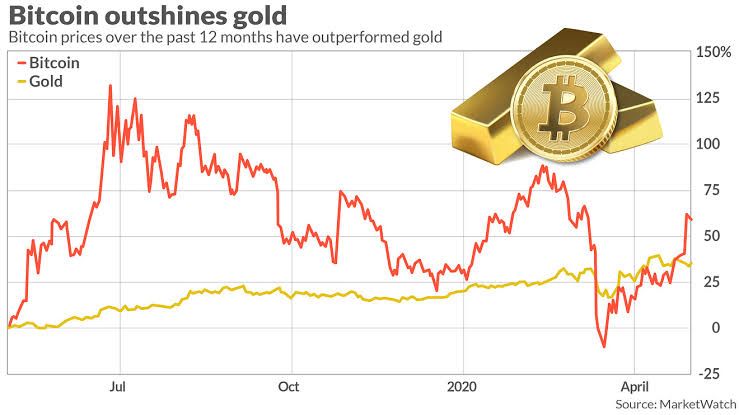
One of the most significant differences between Bitcoin and gold is their volatility. Bitcoin is notorious for its sharp price swings. Its value can increase or decrease by 10% or more within a single day due to factors such as investor sentiment, market speculation, or news related to government regulations. This volatility makes Bitcoin both an attractive investment for those looking for short-term gains and a risky asset for conservative investors.
Gold, by contrast, is far less volatile. While it does experience fluctuations in price, they tend to be gradual and less pronounced compared to Bitcoin. The relatively stable nature of gold has made it a safer asset to hold over the long term, particularly in uncertain economic climates. However, this stability can also mean lower returns compared to more speculative assets like Bitcoin, which can generate high returns during periods of intense market interest.
3. Market Behavior and Liquidity
Bitcoin is traded 24/7 on cryptocurrency exchanges, which provides it with higher liquidity and accessibility compared to traditional assets. Investors can buy or sell Bitcoin at any time of the day, making it a highly flexible asset. However, this round-the-clock trading can also contribute to high volatility, as it exposes the asset to fluctuations from various global markets that operate during different hours.
Gold, on the other hand, is typically traded on commodities exchanges during set hours, although it can be accessed through various financial products, including gold ETFs, mutual funds, and physical bullion. Gold’s market is generally more established, with deep liquidity and a more predictable trading schedule. While Bitcoin has been gaining in popularity, gold remains the preferred asset for institutional investors due to its long-standing market stability.
4. Regulation and Legal Framework
Gold has been heavily regulated by governments for centuries. Central banks hold gold reserves as part of their monetary policy, and the market is governed by strict rules to ensure that trading and ownership are transparent. Governments often use gold as part of their strategy to stabilize national economies, making it a relatively safe asset to trade.
Bitcoin, by contrast, exists in a more uncertain regulatory environment. While many countries have started introducing regulations to manage Bitcoin and other cryptocurrencies, there is still no universally accepted framework. In some countries, Bitcoin is treated as a currency, while in others, it is considered a commodity or an asset. The regulatory uncertainty surrounding Bitcoin makes it more prone to sudden changes in value, as market participants react to news of potential regulatory crackdowns or favorable legislative developments.
For example, the United States has yet to define clear guidelines on how Bitcoin should be treated for tax purposes or within the financial system. In contrast, countries like El Salvador have made Bitcoin legal tender, demonstrating the varying levels of regulatory acceptance across the globe.
5. Storage and Accessibility
Gold requires physical storage, whether in a vault, safe, or as part of a gold ETF. While this provides security and peace of mind for some investors, it also presents logistical challenges. Investors must ensure that their gold is stored safely, often at a significant cost, and there may be fees associated with insurance and storage. Moreover, transporting or selling physical gold requires a well-established network of dealers, which can sometimes limit liquidity.
Bitcoin, being a digital asset, offers the advantage of ease in storage and transfer. Bitcoins are stored in digital wallets, which can be accessed from anywhere in the world with an internet connection. Investors can store their Bitcoins in private wallets for added security or on exchanges, though the latter is generally considered less secure. The digital nature of Bitcoin makes it highly portable, as it can be transferred almost instantly across borders without the need for physical infrastructure or intermediaries.
6. Long-term Potential
Both Bitcoin and gold have long-term potential, though in different ways.
Gold’s role as a store of value and inflation hedge has been well-established over thousands of years. As a commodity, its value is tied to the physical properties of the metal, as well as its limited supply and demand. The long-term outlook for gold remains steady, especially in times of economic or geopolitical instability. Central banks’ continual accumulation of gold reserves further bolsters its position as a trusted asset in the global financial system.
Bitcoin’s long-term potential is more speculative but equally promising for some investors. Bitcoin has become increasingly recognized as “digital gold” due to its fixed supply of 21 million coins, which can act as a hedge against inflation. Furthermore, the rise of decentralized finance, blockchain technology, and Bitcoin’s growing acceptance by institutional investors may contribute to its increasing value over time. However, its future is still uncertain due to regulatory issues, technological challenges, and the potential for competition from other digital currencies.
7. Which is Better for You?
The choice between Bitcoin and gold ultimately depends on an investor’s risk tolerance, financial goals, and investment timeline.
Gold may be a better option for risk-averse investors looking for stability, predictable returns, and a hedge against inflation. It has a proven track record of maintaining value and offers a tangible asset that is universally recognized and accepted.
Bitcoin could appeal to those willing to take on more risk for potentially higher returns. Its volatility presents both opportunities and challenges, and its growth prospects as a digital asset are still unfolding. Bitcoin’s potential as a decentralized store of value in a digital-first world makes it an attractive option for those looking to diversify their portfolio with more speculative assets.
Conclusion
While Bitcoin and gold serve similar purposes—acting as alternative stores of value—their fundamental differences in volatility, market behavior, regulation, and long-term potential make them distinct choices for investors. As Bitcoin continues to evolve, it may come to rival gold in terms of its role in the global financial system. For now, the decision to trade one over the other largely depends on individual investment preferences, risk tolerance, and the broader economic climate.





 Free Forex Signals
Leave a comment