Ripple vs. Bitcoin: Understanding the Differences
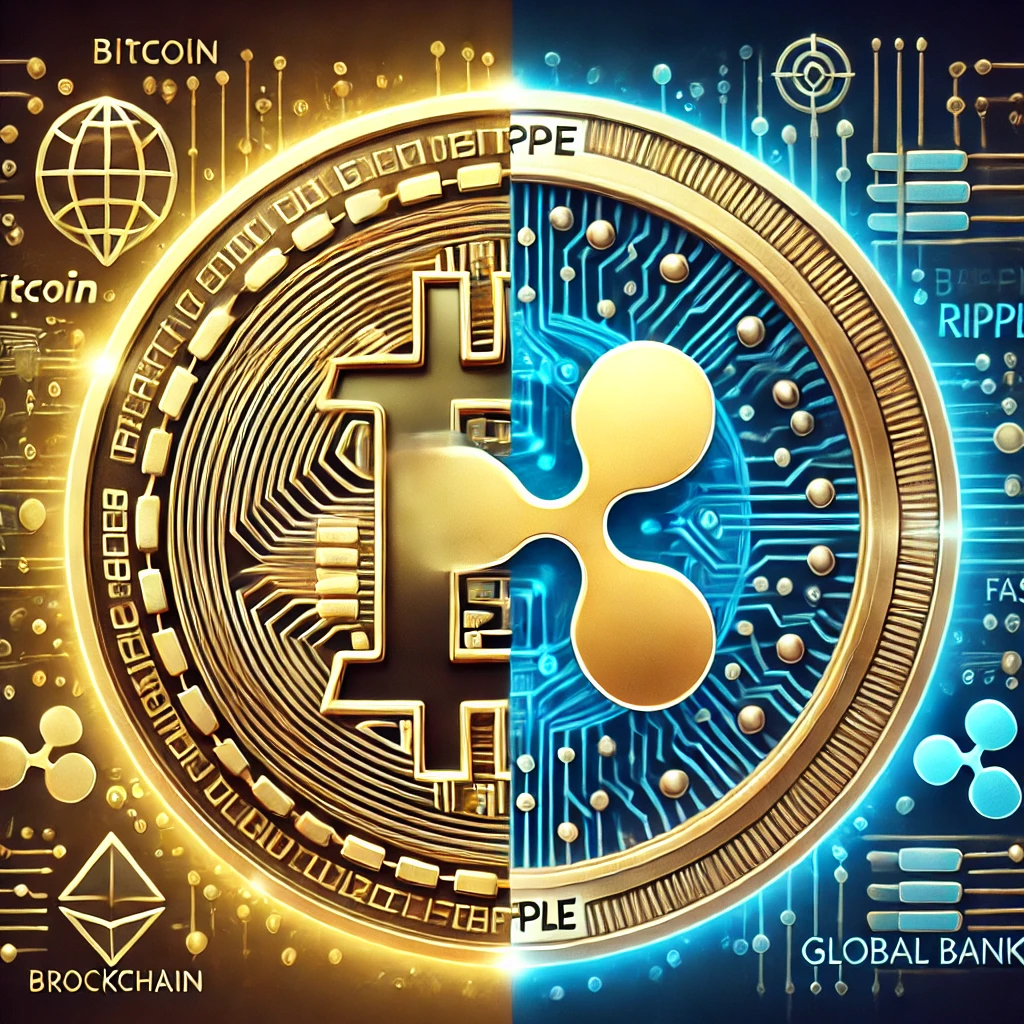
The cryptocurrency space is diverse, with each coin serving unique purposes. While Bitcoin dominates as the first and most popular cryptocurrency, Ripple has carved a niche as a payment protocol optimized for global money transfers. Below is a comprehensive comparison between Bitcoin and Ripple, helping you understand their distinct roles and features.
—
1. Purpose and Use Cases
Bitcoin:
Designed as a decentralized digital currency, Bitcoin facilitates peer-to-peer transactions without intermediaries. It’s primarily used as a store of value and for online payments.
Ripple:
Ripple serves as a payment network that enhances the speed and efficiency of international money transfers. Its cryptocurrency, XRP, acts as a bridge for converting one currency into another seamlessly.
—
2. Technology
Bitcoin:
Operates on a blockchain using Proof of Work (PoW), where miners validate transactions by solving complex problems, ensuring security and decentralization.
Ripple:
Uses the Ripple Protocol Consensus Algorithm (RPCA), a faster and more energy-efficient alternative to mining. Transactions are validated by a network of trusted validators.
—
3. Transaction Speed and Cost
Bitcoin:
Transactions take around 10 minutes or longer, with fees varying based on network activity.
Ripple:
Transactions are near-instantaneous, taking seconds to process, and cost significantly less—ideal for large-scale transfers.
—
4. Decentralization
Bitcoin:
Fully decentralized with thousands of nodes worldwide, no single entity controls the network.
Ripple:
Less decentralized, as the Ripple company holds a significant portion of XRP and has a major influence over the network.
—
5. Adoption
Bitcoin:
Accepted globally as a form of payment and widely regarded as “digital gold” by investors.
Ripple:
Partnered with financial institutions like banks and payment providers, making it popular in the corporate world.
—
6. Supply and Distribution
Bitcoin:
Has a fixed supply of 21 million coins, creating scarcity and increasing its value over time.
Ripple:
Out of the 100 billion XRP created, a large portion is held by Ripple, which gradually releases tokens into circulation.
—
Conclusion
Bitcoin and Ripple are revolutionary in their own ways. Bitcoin is a decentralized digital currency offering financial freedom, while Ripple provides a solution for fast and affordable cross-border payments. Whether you’re an investor or a tech enthusiast, understanding these differences can help you make better decisions in the crypto space.





 Free Forex Signals
Leave a comment