In the dynamic world of cryptocurrencies, where innovation seems to occur at warp speed, one factor consistently weighs on users’ minds: fees. Whether you’re a seasoned trader, a DeFi enthusiast, or simply sending crypto to a friend, transaction costs can quickly erode your gains or make small transfers impractical.
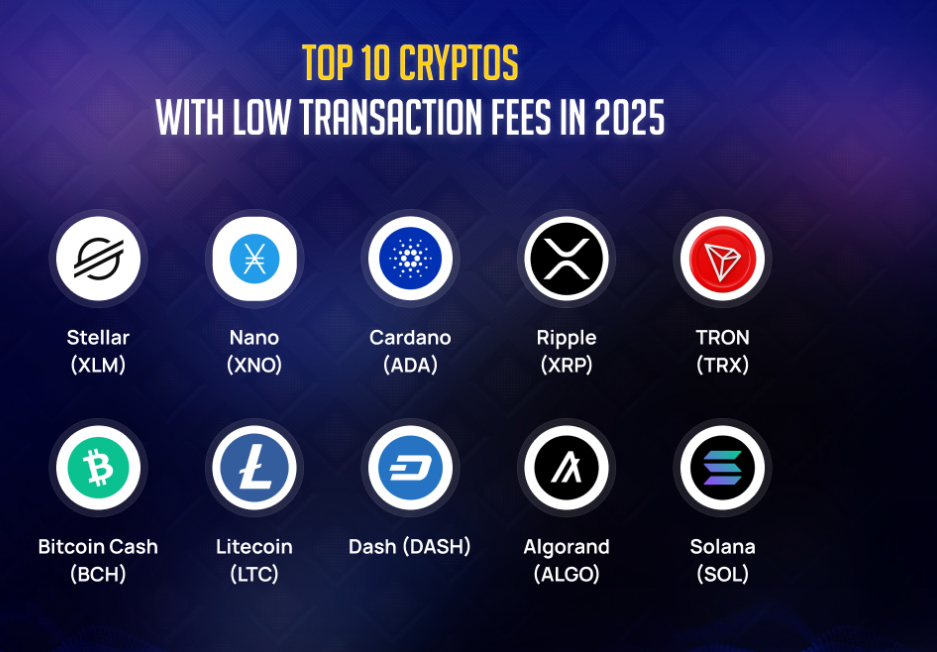
Fortunately, the crypto landscape is evolving, and several projects and solutions are emerging that prioritize minimal transaction fees, bringing us closer to the ideal of near-zero cost transfers.
For years, high gas fees on prominent blockchains like Ethereum have been a significant barrier to entry and usability, particularly for smaller transactions. While the security and decentralization of these networks are paramount, the cost of interacting with them can feel prohibitive. However, the demand for affordable transactions has spurred innovation across the ecosystem, leading to the rise of alternative Layer-1 blockchains and sophisticated Layer-2 scaling solutions.
The Rise of Fee-Conscious Layer-1 Blockchains:
Several blockchain networks have been designed from the ground up with low transaction fees as a core principle. These platforms often employ different consensus mechanisms and architectural choices to achieve higher throughput and lower costs compared to earlier generations of blockchains.
- Solana (SOL): Often lauded for its speed and incredibly low transaction fees, Solana has become a hub for DeFi and NFT activity. The average transaction cost on Solana remains a fraction of a cent, making it ideal for high-frequency trading and microtransactions. Its unique Proof-of-History (PoH) consensus mechanism contributes to its efficiency.
- Cardano (ADA): With a strong emphasis on scalability and sustainability, Cardano boasts significantly lower transaction fees compared to Ethereum’s mainnet. While its ecosystem is still developing, its focus on peer-reviewed research and a layered architecture aims to provide a robust and cost-effective platform for decentralized applications.
- Avalanche (AVAX): This platform is designed for high throughput and low latency, enabling fast and affordable transactions. Its unique subnet architecture allows for the creation of custom blockchains tailored for specific applications, all benefiting from the network’s low base transaction fees.
- Polygon (MATIC) (as a Layer-1): While primarily known as an Ethereum Layer-2 solution, Polygon also operates its own independent blockchain (formerly Matic Network) with significantly lower fees than Ethereum’s mainnet. This makes it an attractive option for users seeking cheaper transactions within its ecosystem.
Layer-2 Scaling Solutions: Taming Ethereum’s Gas Guzzler:
The Ethereum community has been actively developing Layer-2 (L2) scaling solutions to address the high gas fees on its mainnet. These solutions process transactions off-chain while inheriting the security of the underlying Ethereum network, resulting in drastically reduced costs.
- Optimistic Rollups (e.g., Optimism, Arbitrum): These L2s bundle multiple transactions into a single batch and submit compressed data to the Ethereum mainnet. They operate under the assumption that transactions are valid unless proven otherwise, leading to lower gas costs. While withdrawal times can be longer, transaction fees are significantly reduced.
- zk-Rollups (e.g., zkSync, StarkNet): Zero-knowledge rollups use cryptographic proofs to validate transactions off-chain before submitting a validity proof to the Ethereum mainnet. This method offers potentially even lower fees and faster withdrawals compared to optimistic rollups, although the technology is more complex.
- Sidechains (e.g., Polygon PoS): Sidechains are independent blockchains that are interoperable with the main Ethereum chain. They often have their own consensus mechanisms and can offer lower fees and faster transaction times. However, they rely on their own security models, which might differ from Ethereum’s.
Beyond the Blockchain: Centralized Exchanges and Internal Transfers:
While on-chain transaction fees are inherent to blockchain networks, centralized cryptocurrency exchanges (CEXs) often offer internal transfers between their users with minimal or no fees. If both the sender and receiver have accounts on the same exchange, this can be a cost-effective way to transfer funds. However, be mindful of withdrawal fees when moving crypto off the exchange.
Choosing the Right Path for Low-Fee Transactions:
The “best” cryptocurrency or solution for low transaction fees depends on your specific needs and priorities:
- For frequent trading or DeFi interactions with smaller amounts: Layer-2 solutions on Ethereum or blockchains like Solana, Avalanche, and Cardano can be highly cost-effective.
- For simple transfers between users on the same platform: Centralized exchanges often offer free internal transfers.
- For long-term holding with minimal transactions: Network fees might be less of a concern, but withdrawal fees should still be considered.
The Future is Frugal:
The trend towards lower transaction fees in the cryptocurrency space is likely to continue. As Layer-2 technologies mature, and competition among Layer-1 blockchains intensifies, users can expect more affordable options for transacting with digital assets. This evolution is crucial for broader adoption, enabling a wider range of use cases, from micro-payments to complex DeFi strategies, without the burden of exorbitant fees. By understanding the different fee structures and exploring the available low-cost alternatives, users can navigate the crypto world more efficiently and keep more of their digital assets where they belong – in their own wallets.





 Free Forex Signals
Leave a comment